
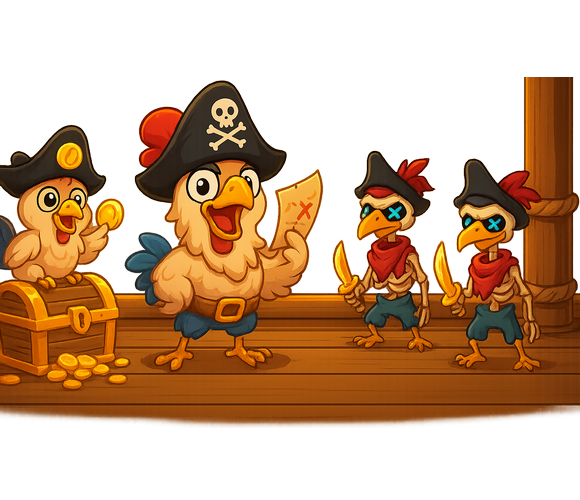






My Adventure with Chicken Pirate Crash Game: A Player’s Journal
I’ve played hundreds of online slots in my time, but every once in a while a game sneaks up on me and completely changes how I think about gambling online. That happened when I stumbled across Chicken Pirate Crash Game. At first, the name sounded like a joke—why on earth would anyone mix chickens, pirates, and a crash slot mechanic? But I clicked anyway, and within five minutes, I was grinning like an idiot and sweating over when to hit that cash-out button.
This isn’t just another slot where you spin reels and hope for matching symbols. It’s a game of nerve, timing, and luck where a tiny pirate chicken becomes your unlikely companion on the high seas of risk and reward. Let me walk you through my own experience, what I discovered along the way, and why this goofy little game has become one of my regular stops when I feel like gambling online.
First Encounter: Curiosity Turns Into Tension
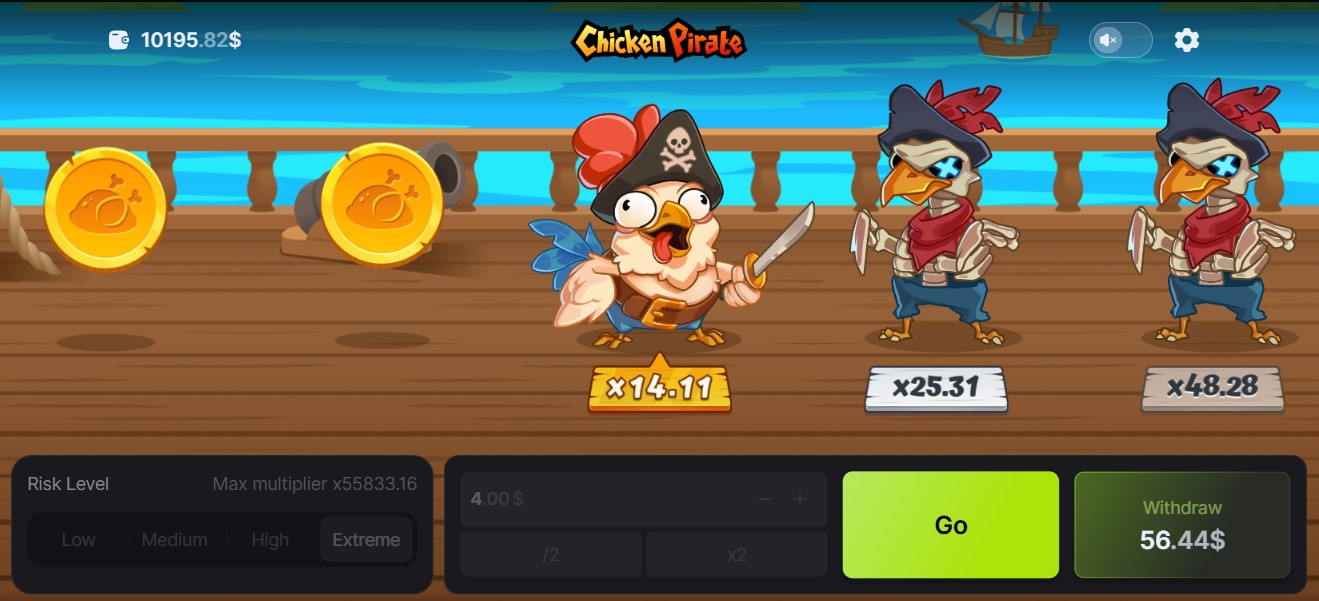
I opened the game expecting a laugh, and to be honest, I got one. The graphics are cartoonish, colorful, and intentionally silly. A chicken with an eye patch waddling across the deck of a ship? Come on. But then the round started, and suddenly I wasn’t laughing—I was leaning forward in my chair.
The multiplier started climbing: 1.2x, 1.4x, 1.7x… my bet was slowly turning into something bigger. But then the anxiety hit. Do I cash out now? Or wait a few more seconds? I hesitated, thought I’d be clever, and—boom—CRASH. The chicken fell, my bet was gone. That was round one.
Instead of feeling annoyed, I felt challenged. The game had me.
Understanding the Rules (the Hard Way)
The basic idea of Chicken Pirate is simple:
- Place your bet.
- Watch the multiplier climb.
- Cash out before the crash.
But the simplicity is deceptive. It’s not about learning the rules—it’s about mastering your own nerves. Every second the multiplier rises, your heart rate goes up with it.
I learned quickly that the game doesn’t follow any obvious rhythm. Sometimes it crashes at 1.05x. Other times it soars past 10x before collapsing. That randomness is what makes each round feel fresh and dangerous.
The Demo Mode Playground
After a few painful losses, I did the smart thing and switched to demo mode. No money on the line, just pure practice. It turned out to be the best way to understand the flow.
I experimented with different “cash-out points.” At 1.5x, I was winning almost every round, but the payouts were small. At 3x or higher, I won less often, but when I did, it felt incredible. Playing for free let me get comfortable with both the mechanics and the mental game, so when I went back to real money, I felt more in control.
Betting Experiments: Finding My Sweet Spot
Everyone has their own betting style. Mine evolved over a few sessions:
- Low-stakes warm-up: I start with small bets ($0.10–$0.50) just to loosen up. It keeps me from tilting early.
- Steady rhythm bets: Once I feel confident, I bet $2–$5 and aim to cash out around 2x. It’s a balance of safety and excitement.
- High-risk spice: Every now and then, I throw in a bigger bet and let it ride longer. Sometimes it burns me, sometimes it makes my whole session.
What I noticed is that playing cautiously over many rounds builds steady progress, but adding occasional high-risk plays keeps the game exciting. Without those moments of daring, it can start to feel too mechanical.
The Emotional Roller Coaster
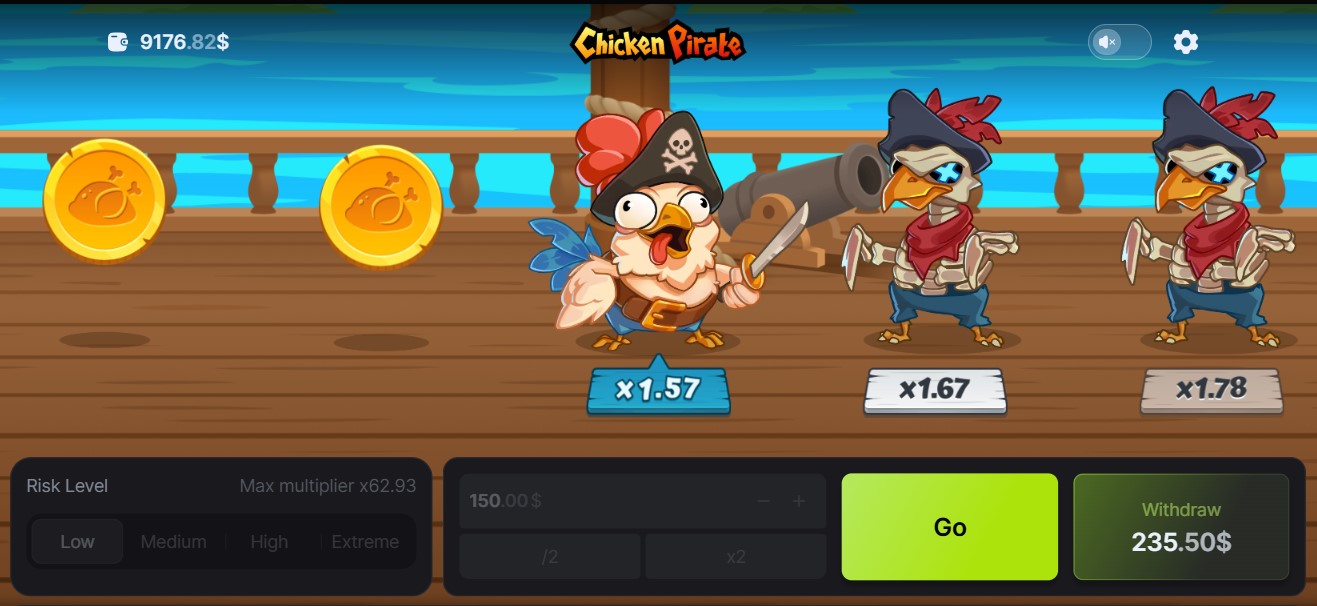
What makes Chicken Pirate different from classic slots is how much you actually feel the game. Slots usually give you short bursts of dopamine when symbols align. Here, you live through 10–20 seconds of escalating tension every single round.
There’s the cautious relief when you cash out early. The adrenaline spike when you risk one more second and it pays off. And the stomach-drop when you push your luck too far and lose it all.
I’ll be honest: the crashes sting, but they also make the wins taste sweeter. Without risk, the game wouldn’t work.
Playing on Mobile: Surprisingly Perfect
I do most of my gaming on my phone these days, and Chicken Pirate feels like it was built for mobile. The interface is clean, buttons are big enough not to mis-tap, and the animations don’t lag. I found myself playing during coffee breaks, in bed, even while waiting for a bus.
There’s something oddly satisfying about tapping “Cash Out” on a touchscreen right as the multiplier hits your target. It feels immediate, like you’re in full control—even though luck is always lurking underneath.
What I Learned About Myself
It sounds silly, but this game actually taught me a few things about my own behavior as a gambler:
- I’m greedier than I thought. I’d plan to cash out at 2x, but when the multiplier hit 2.1x, I’d think “just a little more.” That rarely ended well.
- Patience is underrated. Waiting even one extra second can change everything—but waiting too long is disaster. Finding balance is the challenge.
- Discipline matters. Without bankroll management, the game can chew you up. Setting limits before playing saved me from chasing losses.
Strategies That Work for Me
I don’t pretend there’s a “perfect system” for a game that’s fundamentally random. But here are the approaches that helped me enjoy Chicken Pirate without burning out:
- Set a target multiplier. For me, 2x is the sweet spot most of the time. It doubles my money if I’m right, and it’s achievable often enough.
- Play in sessions. I divide my bankroll into smaller chunks. When I finish one chunk, I take a break.
- Mix safe and risky. I don’t stay conservative all the time—throwing in a bold move keeps the game alive.
- Trust instincts. If I feel uneasy, I cash out. Some of my best wins came from listening to that gut feeling.
The Good, the Bad, and the Funny
What I love:
- The quirky chicken pirate theme that doesn’t take itself seriously.
- The constant tension that makes every round meaningful.
- Mobile play that feels smooth and natural.
- The provably fair system—knowing the outcomes aren’t rigged gives me peace of mind.
What frustrates me:
- Early crashes at 1.01x or 1.05x. Brutal.
- The temptation to keep chasing bigger multipliers.
- No bonus features—it’s just the crash mechanic, so variety is limited.
Funniest moment:
One time I cashed out at 1.02x, thinking it would crash immediately. Instead, it soared past 50x. I laughed so hard, but at least I didn’t lose.
Why I Keep Playing
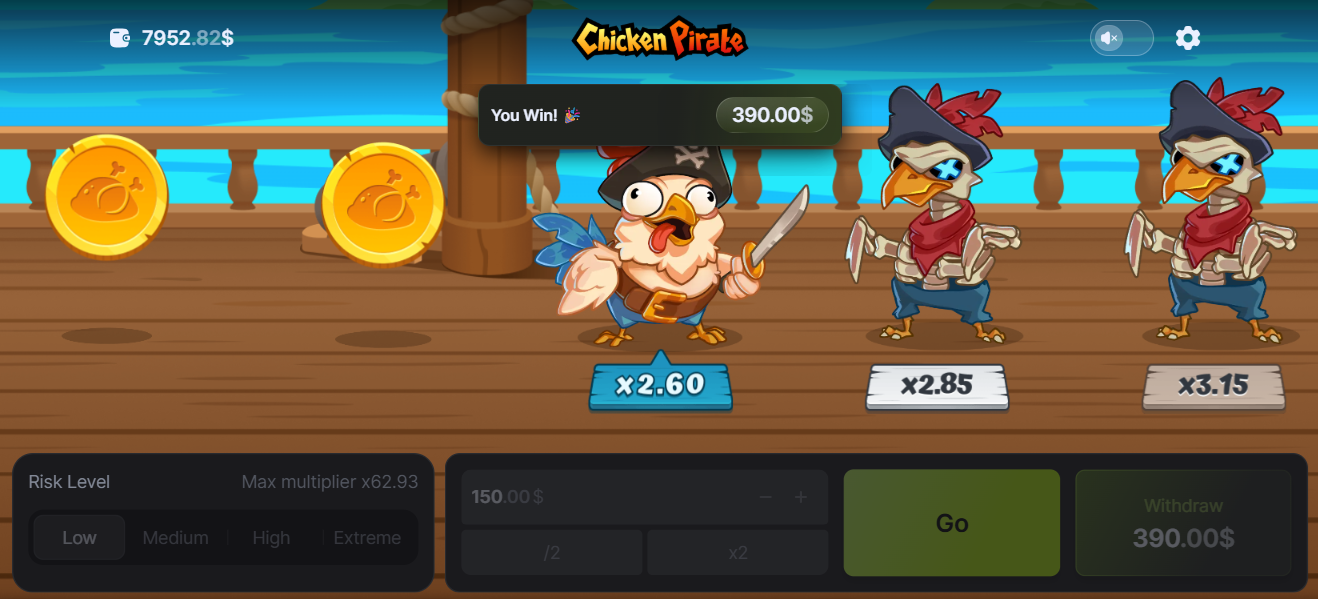
After weeks of trying Chicken Pirate, I realized it scratches an itch that traditional slots don’t. It’s less about flashy animations or endless features, and more about raw, simple risk. It feels like flipping a coin, except the coin hangs in the air longer and longer until your nerves give out.
I don’t play it expecting to win big every time. I play it for the experience—the tension, the laughs, the occasional glory. And honestly, that’s enough to keep me coming back.
Final Thoughts
Chicken Pirate Crash Game won’t be everyone’s cup of tea. If you like complex slots with free spins, bonus rounds, and progressive jackpots, you might find it too barebones. But if you enjoy quick bursts of excitement, quirky humor, and the thrill of risk, this game hits the sweet spot.
For me, it turned into more than just a slot. It became a little ritual: place a bet, cheer on my pirate chicken, and see if today’s the day I cash out at the perfect moment. Sometimes I win, sometimes I crash—but I’m always entertained.